






Constipation in Adults
A Guide to Understanding Constipation
Are you struggling with constipation? You’re not alone!
Constipation is a common problem that means you might not be going to the bathroom regularly, or it may be hard or painful when you do. You might experience discomfort, hard or dry stools, or feel like your bowels aren’t fully empty. Remember, there are ways to find relief!1,2
This condition might be short-term, but when constipation sticks around for a long time, it’s called chronic constipation. You are at higher risk of constipation if you are:2,3
Child
Older Adult
Woman
Causes of Chronic Constipation
Lifestyle
Lifestyle
Like eating less fiber, drinking less fluids, or not using the bathroom regularly.1
Physical Inactivity
Physical Inactivity
Not getting enough movement or exercise.1
Medications
Medications
E.g. pain killers,
anti-hypertensive
drugs, and antiseizure.2
Illness and Stress
Illness and Stress
Being sick or unhealthy
and feeling worried, overwhelmed, or tense.1

Constipation in the Elderly
As we approach our 60s, changes in our digestive system happen.
These changes can lead to chronic constipation.4
-
Lack of movement.5
-
A feeling of looseness in your pelvic area.5
-
Taking too many drugs regularly.5
-
Chronic medical conditions, like diabetes.5
-
Malnutrition.5
The main risk factors for constipation in the elderly population include:
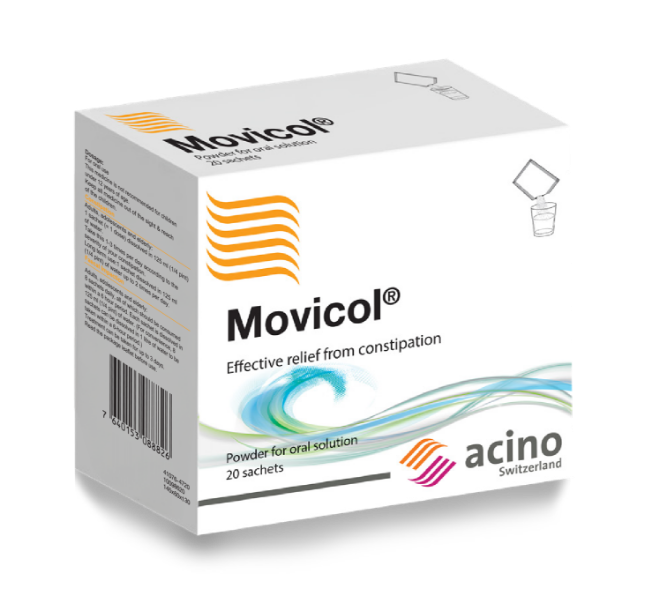
Movicol®
Since the nineties, Movicol® has been supporting the digestive health of many patients, helping them manage constipation effectively.6
For Movicol® Patient Information Leaflet, Please Click Here.
Your Health, Within Reach!
Find It Here
Movicol® contains 186.87 mg (8.125 mmol) sodium per dose, equivalent to 9.3% of the WHO recommended maximum daily intake for sodium. When used long term for constipation, the maximum daily dose of this product is equivalent to 28% of the WHO recommended maximum daily intake for sodium. Movicol® is considered high in sodium. This should be particularly taken into account for those on a low salt diet.7
References:
1. NHS. (October 2023). Constipation. Available at: https://www.nhs.uk/conditions/constipation. (Accessed March 2026). 2. Mayo Clinic. (March 2026). Constipation. Available at: https://www.mayoclinic.org/diseases-conditions/constipation/symptoms-causes/syc-20354253. (Accessed March 2026). 3. Mayo Clinic. (March 2026). Constipation in children. Available at: https://www.mayoclinic.org/diseases-conditions/constipation-in-children/symptoms-causes/syc-20354242. (Accessed March 2026). 4. Mounsey, A., Raleigh, M., & Wilson, A. (2015). Management of constipation in older adults. American Family Physician, 92(6), 500-504. 5. Mari, A., Mahamid, M., Amara, H., Baker, F. A., & Yaccab, A. (2020). Chronic constipation in the elderly patient: updates in evaluation and management. Korean Journal of Family Medicine, 41(3), 139. 6. Culbert, P., Gillett, H., & Ferguson, A. (1998). Highly Effective Oral Therapy Polyethylene Glycol/Electrolyte Solution for Faecal Impaction and Severe Constipation. Clinical drug investigation, 16, 355-360. 7. Movicol®. Summary of Product Characteristics, Acino Pharma AG, Birsweg 2, 4253 Liesberg, Switzerland. Revision September 2021.